Urban Art: Injecting Street-Level Energy into Your Brand
There is a raw, unapologetic energy that comes with street culture. It is loud, it is colorful, and it refuses to be ignored. For designers and creators looking to capture that specific vibe—the kind of aesthetic found on a spray-painted wall in a downtown alley or a vibrant mural in a creative district—the right typography is essential. You cannot fake that kind of attitude with a standard corporate sans-serif. You need a typeface that brings the noise, and that is exactly where a heavy-hitting option like Urban Art comes into play.
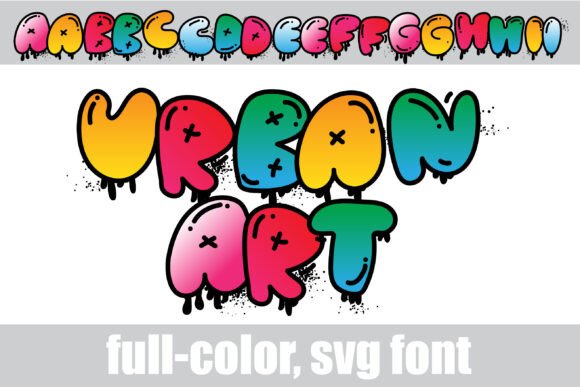
At its core, Urban Art is a full-color font that embraces the graffiti style, complete with the intricate details that make street art so compelling. We are talking about letterforms that look wet, featuring realistic drips and a striking rainbow color palette. However, unlike standard black-and-white fonts that you might color manually, this is a premium font utilizing modern typography technology. Specifically, it is an OpenType full-color (SVG) font. This means the color and texture are baked directly into the file. When you type, you get those vibrant gradients and dimensional shadows immediately.
The Technology Behind the Canvas
Understanding how to use a font like Urban Art is just as important as knowing where to put it. Because this is an SVG (Scalable Vector Graphics) font, it behaves a bit differently than the standard text files you might be used to. The installation process is standard—you simply install the .OTF file via FontBook on a Mac or your Control Panel on Windows. Once installed, it acts like any other font on your system.
However, there is a nuance regarding software compatibility that you need to be aware of before starting your project. Full-color fonts are a relatively recent innovation in the world of design assets. As such, not every program is equipped to render the colors. If you open Urban Art in a program that does not support SVG technology, the font will appear entirely black. This can be confusing, especially because even some compatible programs show the font as black in the preview window. The true test is typing directly onto your document canvas. If you see the rainbow hues and dripping details, your software is compatible.
Currently, major players in the design industry support this technology. If you are using Adobe products like Photoshop or Illustrator, you are good to go. Silhouette Studio is also fully compatible, which is a massive win for the crafting community. Additionally, Quark and Inkscape support full-color SVG fonts. For creators using these platforms, Urban Art offers a seamless way to add high-impact visuals without complex layering or manual coloring.
Visual Personality and Brand Impact
So, what does this font actually bring to the table visually? It is aggressive, youthful, and incredibly textured. The "drip" effect is the defining characteristic here, giving the impression that the paint is still fresh. This creates an immediate sense of movement and urgency. In the world of brand identity, this is a specific tool for a specific job. You would not use this for a law firm’s letterhead, but for a clothing brand, a music festival, or a streetwear startup, it is perfect.
Using a display font like Urban Art can significantly influence how your audience perceives your brand. It signals that you are current, edgy, and unafraid to break from tradition. In terms of visual hierarchy, this typeface demands to be the focal point. It is designed for headlines, logos, and hero images. If you try to use it for body copy, you will run into readability issues, and the visual weight will be too heavy. It works best when paired with a clean sans-serif or a simple serif font for the supporting text. This contrast allows the headline to scream while the body text whispers, guiding the reader's eye effectively.
Practical Applications: Where to Use Urban Art
The versatility of Urban Art extends across various mediums, provided the context is right. Here are some practical ways to leverage this creative font in your upcoming projects:
- Logo Design and Branding: For businesses in the entertainment, fitness, or lifestyle sectors, Urban Art can create a memorable logo that stands out in a crowded market. The vector-based nature of SVG fonts means you can scale your logo for a billboard or shrink it for a favicon without losing the crispness of the "paint" edges.
- Social Media Graphics: In the fast-scrolling environment of Instagram or TikTok, you have milliseconds to grab attention. The rainbow palette and high-contrast style of this font are perfect for stop-scroll thumb action. Use it for announcements, sale alerts, or event promotions.
- Packaging Design: If you are designing packaging for a product targeting a younger demographic—think energy drinks, candy, or skate accessories—this font adds an instant "cool factor." It communicates flavor and energy just through its visual style.
- Merchandise and Apparel: T-shirts, hoodies, and hats are natural homes for graffiti-style typography. Because the font includes alternate glyphs (accessible via your system or software like Silhouette Studio), you can mix and match letter styles to create a custom, hand-painted look that avoids repetition.
- Event Flyers and Posters: Whether it’s a local gig, a block party, or a creative workshop, the aesthetic of Urban Art sets the mood instantly. It replaces the need for complex illustrations because the text itself is the artwork.
Maximizing Your Design Assets
When working with a premium font like Urban Art, preparation is key to getting the most out of your investment. First, always check the licensing. While it is likely free for personal use, most commercial applications require a specific license. Ensure you have the correct permissions before printing merchandise or selling digital products.
Next, consider the font pairing strategy. As mentioned, Urban Art is a heavyweight. It needs a counterbalance. Avoid pairing it with other decorative, handwritten, or script fonts, as this will create visual chaos. Instead, look for a geometric sans-serif or a modern serif font. The simplicity of the supporting typeface will make the complexity of Urban Art pop even more.
Finally, explore the alternate characters. The ability to access different color variations or stylistic alternates through a glyph map adds immense value. It allows you to customize the text to fit specific color schemes or create a more organic, less digital feel. This level of customization transforms a standard font file into a robust design asset.
Conclusion
Typography is the voice of design, and sometimes that voice needs to be loud. Urban Art offers a specific, high-octane aesthetic that resonates with modern audiences looking for authenticity and edge. By understanding the technology behind SVG fonts and applying this typeface to the right projects—from logo design to social media graphics—you can elevate your creative work from standard to striking. It is a bold choice, but in a world of safe designs, bold is exactly what gets noticed.